
Unknown's avatar

About layanglicana

Author of books on Calcutta, Delhi and Dar es Salaam, I am now blogging as a lay person about the Church of England and the Anglican Communion. I am also blogging about the effects of World War One on the village of St Mary Bourne, Hampshire.

Harvesting Experiment

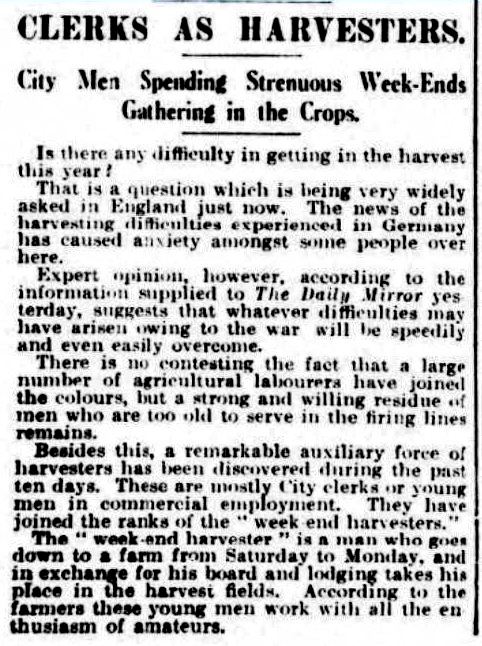
Clerks as harvestersClerks as harvesters - CopyGoodness knows how The Daily Mirror had got hold of the story, but John Notley hoped that the first batch of Londoners he was getting on Friday evening would indeed have ‘all the enthusiasm of amateurs’. He certainly had plenty of work left for them to do, and plenty of acres for them to do it in.

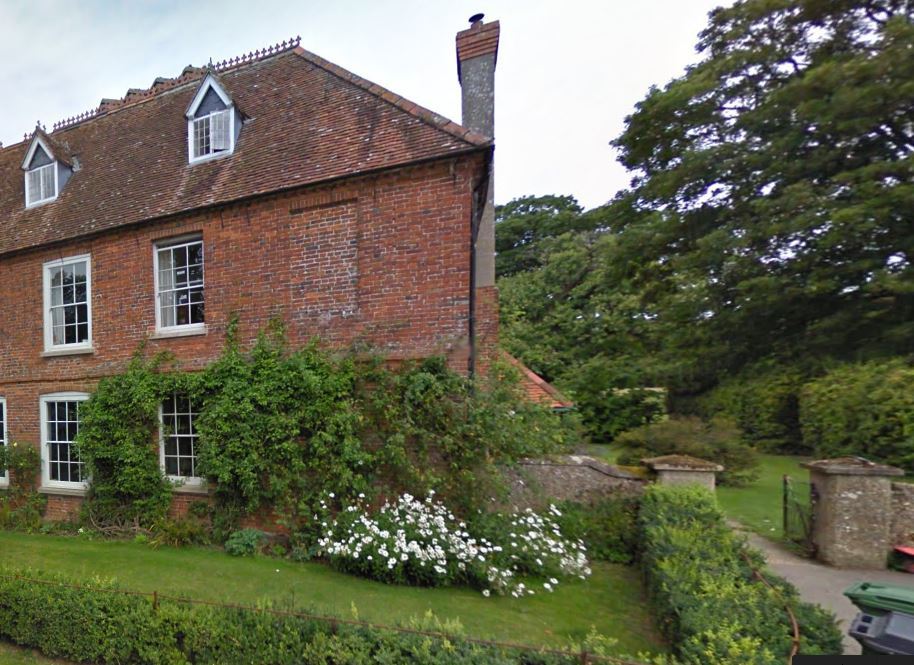
John and his son Charles had run Egbury Farm as the bailiff for Mr Rouyer when he owned Dunley Manor. And they had continued with Mr Francis Holman when he bought the Dunley estate in 1902.
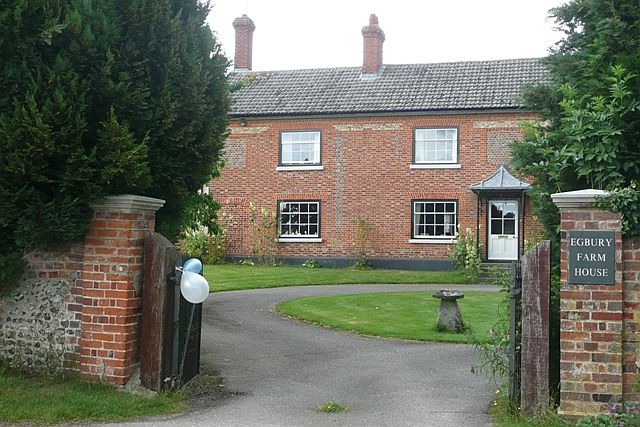
© Copyright Graham Horn and licensed for reuse under this Creative Commons Licence via geograph.co.uk

© Copyright Graham Horn and licensed for reuse under this Creative Commons Licence via geograph.co.uk


They were a Dorset family originally, but like several others from the county had moved up to Hampshire in the 1890s when the economic difficulties in farming hit home and several farms became available at very reasonable prices. In Hurstbourne Tarrant, there was George Miles and in Ibthorpe John Bound, both also originally Dorset families.


A note on sources

The information about the Dunley estate and the Notleys is taken from 59A03/7 in the Hampshire Record Office. They also appear in the various trade directories.

Daily Mirror

The Daily Mirror was a popular daily newspaper and claimed that it had a “Certified circulation larger than that of any other Daily Picture Paper”. It was a tabloid rather than a broadsheet. It had a long standing relationship with the labour and trades union movement and was aimed at the middle and working class households.

It was one of the first dailies to introduce photographs to its pages and a quarter of the paper concentrated on photographs of the war and those associated with it. It cornered the market for the bizarre and aimed to amuse as well as to inform. It minimised its news content to a double page, leaving space for adverts on female interests, such as ‘Infant feeding’ and ‘Grey Hair’. Its Human Interest articles covered stories such as “ ‘Spiritualistic’ Quacks in War-time”, which told of Mediums, Crystal Gazers and Palmists being bombarded with female believers, worried about relatives at war.

It featured a political cartoon; adverts for clothing outlets, tobacco and food; short stories “Like all other Men” by Mark Allerton being one of many; ‘This Mornings Gossip’; a sport and entertainment page; ‘A thought for today’ and ‘In my Garden’ also featured regularly. It often featured Winston Churchill as he wrote a column in the ‘Sunday Pictorial’ for the Paper.
Frederick George Thring Signs Up In The Antipodes

Frederick George Thring had felt constricted in England. He longed for a climate where a man could work outdoors without getting frozen or soaked half the year. And, even if there was no gold left in them thar hills, he might at least make a decent living for himself and the family he hoped to have one day.

When his parents decided to move from Wiltshire to take on the Post Office in St Mary Bourne, it provided the nudge he needed to make his own way in the world. *

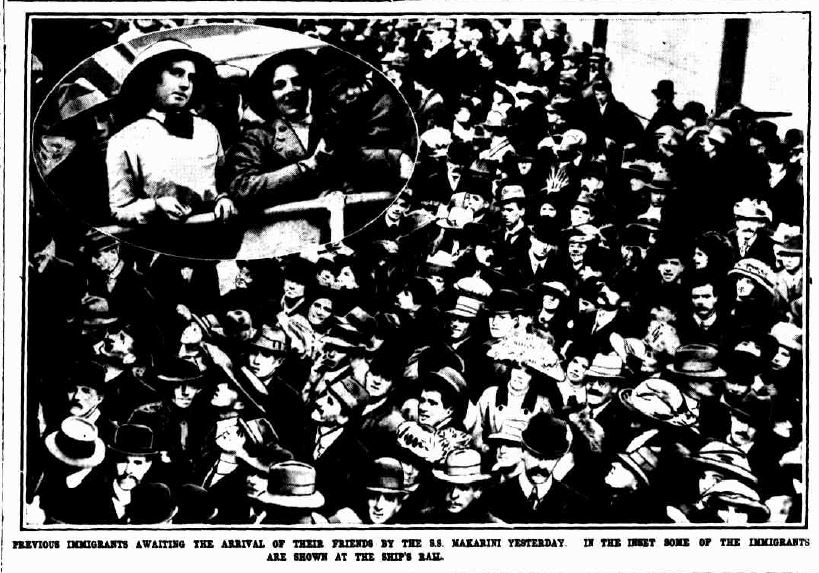
In 1913 Frederick got an assisted passage on the SS Makarini en route for Australia and arrived in Melbourne on 19 June 1913. The following day he set foot on Antipodean soil, full of hope for the future (along with his 829 companions on a similar adventure).

We do not know how he fared over the next year but, as we do know, what happened then was Britain’s declaration of war which involved, willy nilly, Australia and New Zealand. On 6 August the British government ‘invited’ the Australians to join them and, good for Frederick, only five days later he enlisted.

The Australian Naval and Military Expeditionary Force (AN&MEF) was a small volunteer force of approximately 2,000 men, raised in Australia shortly after the outbreak of the First World War to seize and destroy German wireless stations in German New Guinea in the south-west Pacific. Britain required the German wireless installations to be destroyed because they were used by Vice-Admiral Maximilian von Spee‘s German East Asian Cruiser Squadron, which threatened merchant shipping in the region…The AN&MEF began forming following a request by the British government on 6 August 1914. The force was assembled under the guidance of Colonel James Legge, and was separate from the Australian Imperial Force forming under Major-General William Bridges. The AN&MEF comprised one battalion of infantry of 1,000 men enlisted in Sydney—known as the 1st Battalion, AN&MEF—plus 500 naval reservists and ex-sailors who would serve as infantry.

It seems from his army papers that, while he was duly attested on 11 August, he was only finally ’embodied’ on 29 March 1915, with the rank of Sergeant and the regimental number of 1004 into the 20th Battalion.

We shall hear more of Sergeant Thring in the next few months.

Frederick George Thring 15 Aug 1914


A note on sources

*We know from other sources that the Thrings took on the post office, but (presumably because of the war) there seem to have been no editions of the Post Office Directory between 1912 and 1920. We cannot therefore as yet pinpoint the exact year they came, so do not know whether Frederick George was here before his departure for Australia.

We do know that he travelled on the SS Makarini, but do not know whether his passage was ‘assisted’ or not. It seems likely that it was, hence I have written it that way.

Private Frederick George Day of the 1st Hampshire Regiment

001 (5) - CopyElizabeth Day Purver‘s heart went out to her brother George, and his wife Sarah Ann (née Smith). His Frederick, the eldest of their three sons, had been summoned by the army and was now on his way to the front with his battalion of the Hampshire Regiment.

She was very fond of her nephew, although he was another one putting romantic notions of regimental life into her own little Frederick, whom she sincerely hoped would be too young to be embroiled in this war, at least.

She was also moderately fond of her sister-in-law, although she came from an old Hurstbourne Tarrant family, the neighbouring village. This was only three miles away, but the two villages had always regarded each other with some suspicion. It was rumoured that the vicar of the day in Hurstbourne Tarrant had once gone round the bend, and the villagers had had an earnest discussion about whether the situation was so bad that it merited walking to St Mary Bourne every Sunday –  which would perforce involve worshipping ‘amid the alien corn’. Though one or two had made the weekly pilgrimage, most seem to have decided that worship led by a mad vicar was preferable to being surrounded by the ‘queer folk’ of Stoke and Bourne.

In the case of the Smiths, it was a little more complicated as Sarah Ann’s grandfather, William Smith, had married a Sarah Holdway and his father, Thomas,  in turn had married another Sarah Holdway. And the Holdways were definitely a St Mary Bourne family. A few had strayed into Hurstbourne Tarrant, but none had achieved the worldly success of the Bourne Holdways – they had always remained the poor relations, even though there had been Holdways in Hurstbourne since James, born in 1582, so you would think they had plenty of time to establish themselves…of course it was always possible that it was the other way round, the Hurstbourne Holdways could have colonised St Mary Bourne. Hmmm, not sure what she thought of that idea. And she must stop day-dreaming and get on with the practicalities of her life…


A note on sources

These are sparse! We do not have access to Frederick George Day’s service records, unfortunately, other than his medal card, which gives his regimental service number (7422) and the date he arrived at the front, of which more later.

Edwin and James Pike of the 1st Hampshire Regiment

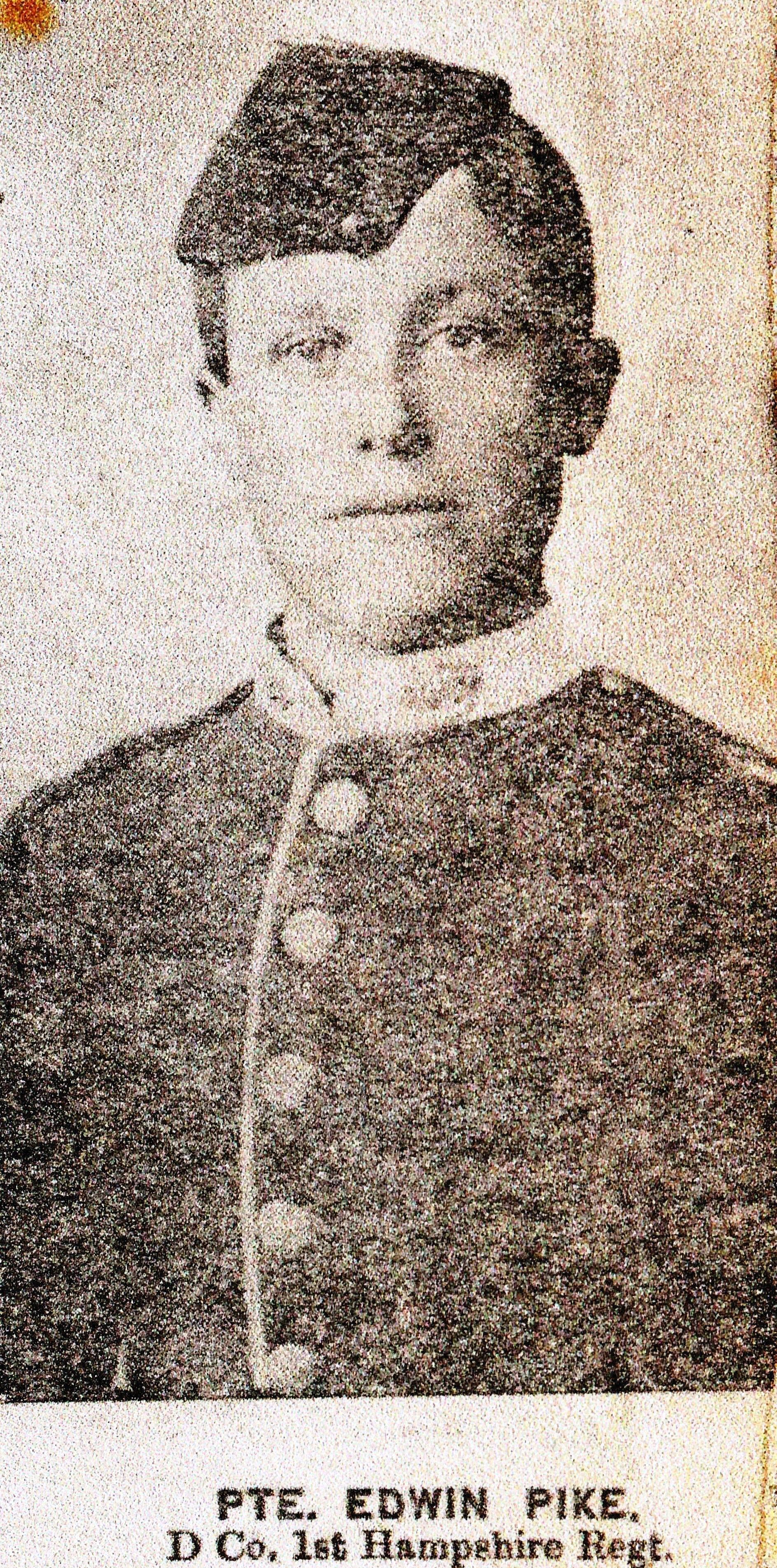
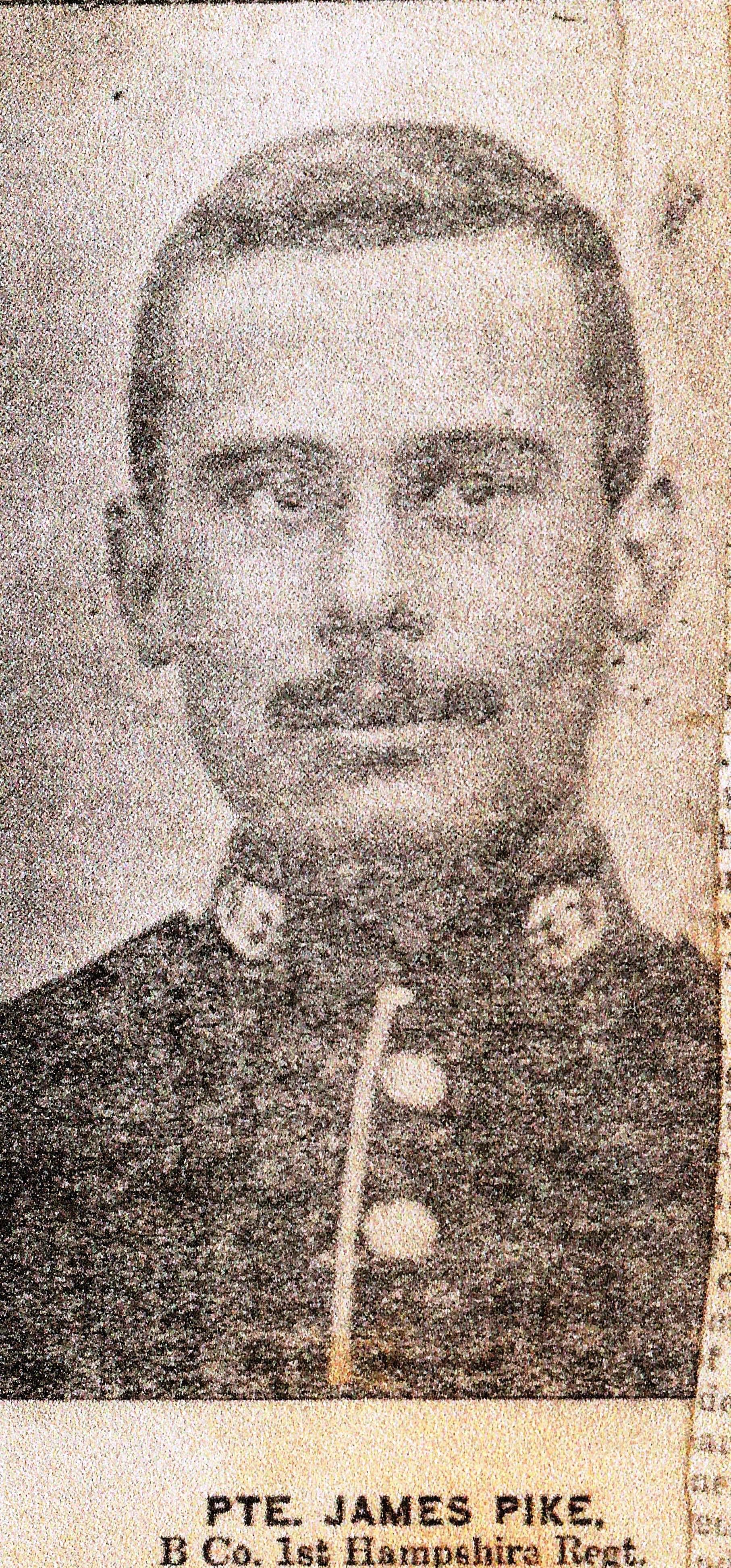
It was a rather sad household that sat down to tea that evening in Lower Rank. Ann Gibbons Pike had just seen her two middle sons off to war – again. Edwin and James were reservists thanks to their previous service, so of course they were the first to be called up as soon as this new war in Europe had started. They had both gone in Eli Goodyear’s cart to Andover station with the others, on their way to the depot in Winchester and then to the front. Edward had been in the 1st Battalion for ten years now, and James had joined him, having been in the 2nd Battalion and the Bedfordshires. What a handsome couple of lads they were, weren’t they, even allowing for a mother’s prejudice?

001 (6) - Copy001 (4) - Copy


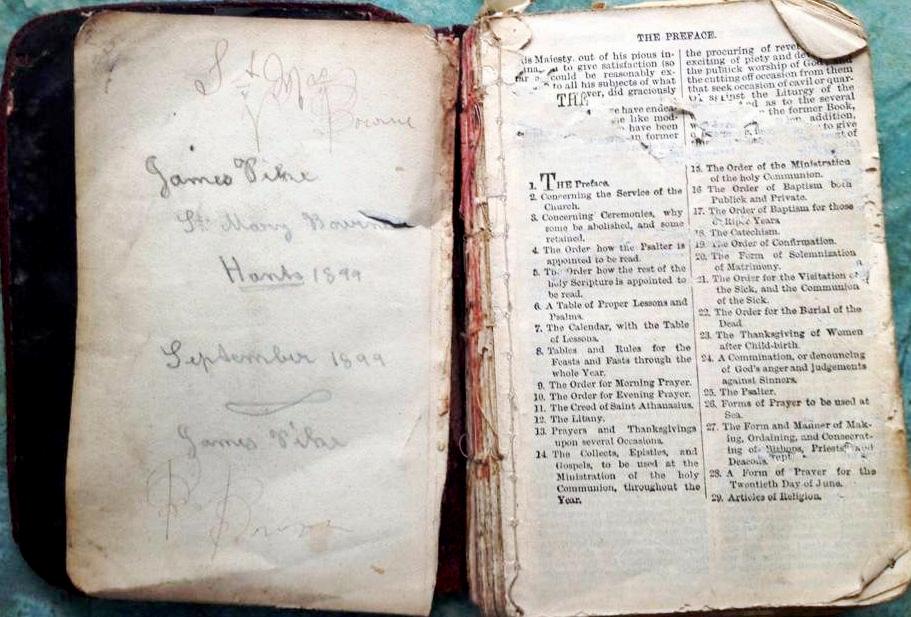
She had given each boy a prayer book with some comforting hymns at the end of the book when they had signed up. It was a comfort to her at least to think this might be of help to them in all the dangers and troubles that they would see. Oh, drat! She had promised herself she would not cry.

James Pike's bible

Ann presumed that her eldest two children, now in London, would be exempt. Sydney was a signalman on the railway, and the Government could hardly send all of them off to war or they would have all the trains in England running into each other. And Mabel’s husband was already forty-six years old  – Ann had always tried to steer her away from ‘the older man’, but her daughter’s foibles had now turned into a blessing.

Twenty years ago, she and Albert had lived under one roof with their five children and now only she and young Herbert remained. How did the saying go? ‘My son is my son till he finds him a wife, but my daughter is my daughter for the rest of her life.’ Well, it hadn’t worked out like that exactly – she hardly ever saw Mabel, and had only seen her little grand-daughter Edith once, soon after she was born, when Mabel and Alfred came down by train to see her (and Mabel’s friends).

But Herbert had not yet found himself a wife, and might never do so. So they would just have to keep each other company in the days and nights to follow.


A note on sources:

1. The photograph of James Pike’s bible is shared with the History Group by his family who now live in the house in the Egbury Road that he did.

Private Sidney Gunnell, 1st Battalion Hampshire Regiment

001 (3) - CopySidney Gunnell,  at the age of 26, had become an orphan. His father had died in 1910 and his mother in 1912.  As one of ten children of Thomas Gunnell and Mary Jane Goodyear, Sidney was of course not alone in the world. However, most of his siblings had gone into service, and most were in London. Annie and Agnes were living at Wakeswood, in service to Henry Longfellow Cooper and his wife. George and his wife were in Longparish. There were only three of them left at 4, Homefield, and he was the man of the house. His sister Jane was nineteen, and Constance May was seventeen.

He had joined the army in preference to going into service, and had been able to send money home over the years to help support the family. But now he was sitting in the army depot in Winchester, waiting for the call to go to France, and he did not share the gung-ho exuberance of some of his comrades, which was beginning to get on his nerves. He had put Jane down as his next of kin, as indeed she was, but he hoped to goodness that he would survive the war to look after his sisters.

And, still aged only 28, Sidney was not against the idea of living to a ripe old age himself…

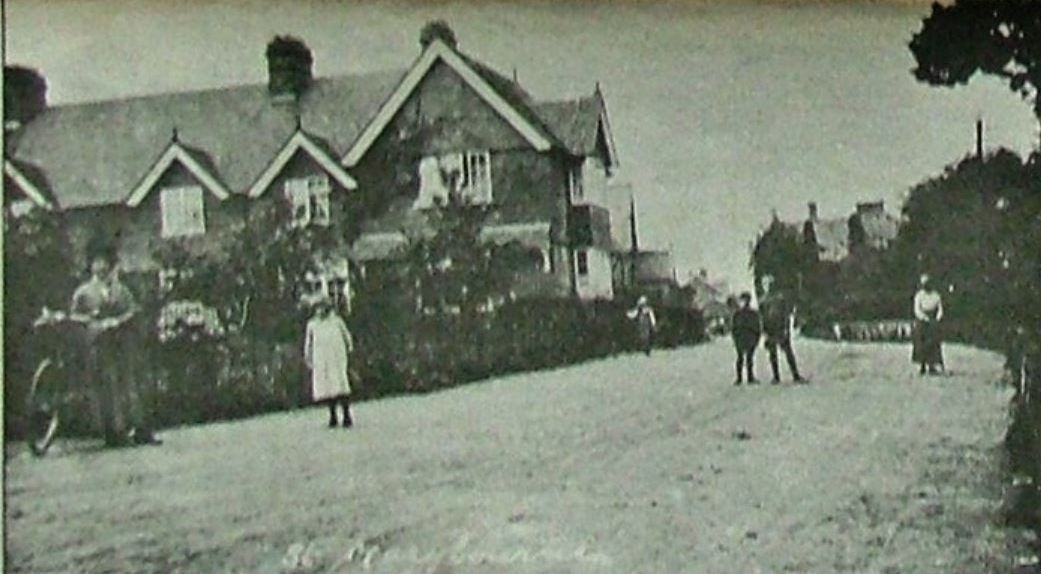
Homefield early 1900s possibly

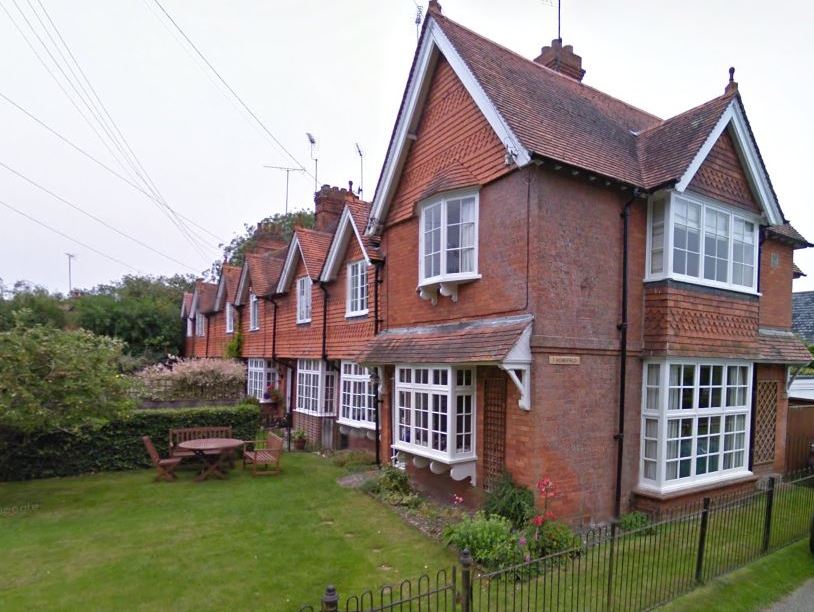
Homefield, early 1900s. The Gunnells lived at number 4, just out of sight on the left of the picture

Homefield 1 to 4 St Mary Bourne, Hampshire - Copy

Homefield today. The house in the foreground is #1.

You can see the Homefield terrace of five houses here, marked in yellow at the bottom right hand side of the map, below the ‘V’ for view.

Swampton area map - Copy

Homefield, numbers 1-5. Courtesy Basingstoke and Deane Council

A Ladies Committee: The Germination Of An Idea

Henry and Frances Selfe - Copy

Courtesy Hockmeyer tree ancestry.co.uk

Frances Hawkins Selfe leant back in her chair at Spring Hill, closed her copy of ‘Cranford‘, and poured herself another cup of Lapsang Souchong. Dear Mrs Gaskell, though her writing was considered old-fashioned now, this was one of her favourite novels – she was always particularly amused by the opening lines:

‘Cranford is in possession of the Amazons; all the holders of houses above a certain rent are women. If a married couple comes to settle in the town, somehow the gentleman disappears; he is either fairly frightened to death by being the only man in the… evening parties or he is accounted for by being with his regiment…for deciding all questions of literature and politics without troubling themselves with unnecessary reasons or arguments; for obtaining clear and correct knowledge of everybody’s affairs in the parish…for kindness (somewhat dictatorial) to the poor, and real tender good offices to each other whenever they are in distress, the ladies of Cranford are quite sufficient.’

Frances and her husband, Henry (Selfe), had moved into Spring Hill after the death of her brother, Thomas, here in 1892. Her other brother, Edwin Black Black-Hawkins, was living at Bourne Court, that is when he and Eleanor were not in London or gadding about somewhere on the Continent.

Born in 1831, she and Henry had had thirteen children, all of whom had lived into adulthood.Henry and Frances Selfe in Wiltshire with children Here they were in happier days, outside their Wiltshire house. Unfortunately, Mrs Beeton had beaten her to it, but she had often thought she should have written a book about how to manage a husband, a house, a staff, and as many children as the old woman who lived in a shoe. ‘Household Management’ had been published in 1861, five years after her marriage to Henry, by which time she had worked out most of her domestic problems for herself. But she would still give it to her daughters and daughters-in-law, nothing else had surpassed it.

What Mrs Beeton had omitted, however, was anything on the subject of the management of villages. And it was this that was preoccupying Mrs Selfe that afternoon. She knew all about war from the wives’ and daughters’ point of view: why, in her own lifetime her family had been involved with two Opium Wars, two Afghan Wars, the Crimea, the Mutiny and two Boer Wars. And the women at home always got together and did what they could to support those at the front.

As she mentally surveyed her fellow females in St Mary Bourne, it became quite apparent to her that only she could organise this. But she needed to be careful how she set about it – it would be counter-productive to be too domineering, and there might well be others who considered themselves the best for the role.

The thing was a pre-emptive strike – if she were the first to call a meeting, it would be hard for others to dislodge her later. She would try that old favourite, ‘I have been approached with a view to getting together a group of us ladies to take on war work…’

Her own military campaign would begin that very instant. She summoned to her presence her unmarried daughter, Margaret, now aged fifty. Still, since Henry’s death a decade ago, she was a great solace. And now she could make herself useful. A great many letters needed to be written and sent out all at once. Afternoon tea, two days hence.

Now, whom should she invite? Well, Mrs Douglas from Gangbridge House. Mrs Royds, the doctor’s wife. Mrs Judge from Bourneside. Mr Atkins, of Diplands, was unmarried. Her own sister-in-law, Mrs Black-Hawkins, was away as usual. As were the Holmans, from Dunley.  Dear Mrs Tovani, the vicar’s wife, was of course in Hurstbourne Priors, because that was the seat of Lord Portsmouth. Rather a silly feudal hangover, when St Mary Bourne was so much larger. Anyway, she would have to ask Mrs Binns, the curate’s wife. Mrs White, from Barford perhaps? To work, to work!

Spring Hill and Diplands Ordnance Survey Map 1875

Spring Hill and Diplands
Ordnance Survey Map 1875


Walter Sims: Reporting For Duty on Wednesday 5 August

001 (3)

courtesy of Andover Advertiser, via Mrs Spankie’s Scrapbook

What a day!

As a reservist, Walter Sims had been among the first to be recalled to the colours. That sounds rather noble, but in fact he and the four others from the village had piled into Eli Goodyear‘s waggon pretty unceremoniously, without time to say much of a proper goodbye, as he had volunteered to drive them to Andover railway station. But of course their friends had waved and cheered, and made a great fuss of them.

As it happens, he had managed to say goodbye to his father, also Walter but called ‘Wallie’ for short. He had been ill with bronchitis for months, and at the good age of 86, had gone to meet his Maker last Sunday. After yesterday’s news of war, Walter had been able to bring forward his burial to early this morning so as to be sure of being able to attend and pay his final respects.

And, scarcely having had time to gather his thoughts, this afternoon he was sitting in a waggon with four other chums from the village, on their way to the battalion depot in Winchester to be licked into shape for a couple of weeks: then they would be off to the front. Only yesterday, he had been expecting to spend this week out in the fields, helping with the last of the harvest. And he had been looking forward to supper at The Plough Inn afterwards, paid for by the farmer!

Walter was of course sad at his father’s death, but in truth he had seen little of him in recent years. When he had gone off to the Boer War 1 in his twenties, his parents had remained together with his younger brother Sidney. But by the time he returned, his father had moved out to live with Sidney at a farm in Andover Down, about six miles away, and his mother had decided to stay in the centre of St Mary Bourne. Walter had not yet married, and had naturally stayed with his mother, and now it was her that he was worried about. He could help her a bit financially now that he was back in the army, but he would never forget the look on her face as she hugged him farewell, and he knew she had been wondering if she would ever see him again. Perhaps she would take his father’s place in Sidney’s home in Andover Down, though he now had a wife, and he was not sure how wife and mother might get on under the same roof. But all her friends were in the village. Maybe she might persuade Sidney to come back to St Mary Bourne. But he had begun to carve out a future for himself there, and would not want to return. And so it went on, turbulent thought succeeding anxious worry. It was worse that there was nothing that he could do, not for the foreseeable future.

Walter shut his eyes, and tried to blank out, more or less successfully, all that was going on around him. That was one thing he had learnt from the last time, how to create a little world of your own into which you could retreat from time to time, during the long periods of waiting, waiting…


 A note on sources

1 No documentary evidence has yet been found of Walter’s service in the Boer War (partly, at least, because Walter Sims was a common name at the time). However, he is said by the Andover Advertiser to have served six years in South Africa,  there is no trace of him in the 1901 UK census, and he would not have been called up at this early stage if he had not already seen military service.

2 We know from the war diaries of the 1st Battalion of the Hampshire Regiment that they did not embark from Southampton for Le Havre until 22 August, two weeks three days later. Presumably the intervening time was necessary to assemble the reservists, re-train and re-equip them – it would have more than a decade since most of them had seen active service.

I am indebted to Twitter for this reference to James Daly’s blog, and this post:

The 1st Hampshires in the First World War: Le Cateau

When war was declared the 1st Battalion of the Hampshire Regiment was part of the 11th Brigade, in the British Army’s 4th Division. They were originally based in the garrison town of Colchester, but moved to Harrow. It was earmarked to embark for Europe as part of the British Expeditionary Force as soon as war broke out. Later in the war at Ypres and the Somme the Territorial and Kitchener Battalions bore the brunt of the fighting, but in 1914 the BEF comprised regular, pre-war Soldiers.

The 1st Battalion of the Hampshire Regiment left Harrow at 12.20am on 22 August 1914, bound for Southampton. At 7am half of the Battalion and the Headquarters embarked on the Breamaer Castle, and the other half on the Castrian. At this point, most of the men were no doubt hoping that the war would be over by Christmas.

The Rubicon Is Crossed

Earl_of_Portsmouth_Vanity_Fair_21_August_1907

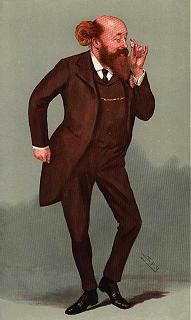
“The Demon”, Newton Wallop, 6th Earl of Portsmouth, caricature by Spy, Vanity Fair Magazine 21 August 1907

The Right Honourable Newton Wallop, 6th Earl of Portsmouth JP, DL (19 January 1856 – 4 December 1917), was a  Liberal politician, who had served as Under-Secretary of State for War under Sir Henry Campbell-Bannerman from 1905 to 1908.

Though he still visited London on occasion, these days he spent most of his time on his estate at Farleigh Wallop. And they would be celebrating ‘the Glorious Twelfth‘ with  a big shoot and house party. (Or at least, that had been the plan).

lh_hampshire_hurstbournepark_ii_fs

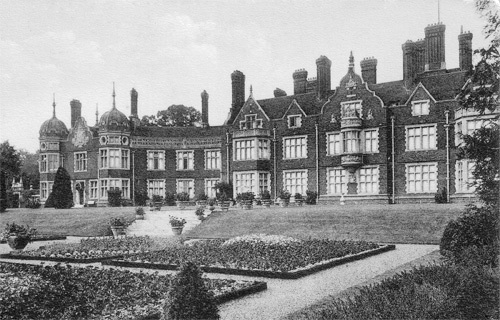
Hurstbourne Park II (burned down in 1965)

The new Hurstbourne Park  was a comfortable place to live. Its predecessor, which Jane Austen had often visited,  breathed Georgian elegance but was a cold and draughty place and he had shed few tears when it burned down on New Year’s Day 1891,  the year he succeeded to the earldom.

The capital and income which funded both the Earl’s building and his largesse came from his ownership of land. In 1873, his father owned 16,401 acres in Hampshire alone, with an income of £14,732. 1 And he was glad to say that he had managed to extend that further (and, in his opinion, manage it better) in his own lifetime.

1785 Portsmouth Estate Map of SMB lands - Copy - Copy

1785 Portsmouth Estate Map of SMB lands (Earl’s property thought to be preceded by ‘A’) Hampshire Record Office: 15M84/MP23/2

The Earl pulled himself out of his explanatory reverie. He felt an enormous weight of ‘noblesse oblige‘ on his shoulders. As one of the first people to hear the news of war (by telephone), he now felt responsible for all those who lived on his land, some of whom depended on its produce for their livelihood.

Why There is War

The following statement was issued from the Foreign Office last night: Owing to the summary rejection by the German Government of the request made by His Majesty’s Government for assurances that the neutrality of Belgium would be respected, His Majesty’s Ambassador in Berlin has received his passport, and His Majesty’s Government has declared to the German Government that a state of war exists between Great Britain and Germany as from 11pm on August 4.

And then he remembered: he did have someone with whom to share the burden: the vicar. Lord Portsmouth was grateful that he had always made it a practice, when feasible, of sending his carriage (and now his motor car) for the priest to lunch with him on the first Friday of the month. Unfortunately the vicar did not yet have a telephone (he must see to that), but could be expected to be somewhere in the parish on a Tuesday. The Reverend William Tovani would know what should be done. He was a St Andrew’s man (whereas, as a Balliol graduate, Lord Portsmouth was quietly conscious of his own ‘effortless superiority’) but none the worse for that. A good man to have on your side in a crisis.

The Earl suddenly realised that the vicar had two sons of an age to be called up – his friend was about to be plunged into a deeply worrying time for his own family, without all that he would have to bear as being responsible for ‘the cure of souls’ in Hurstbourne Priors and St Mary Bourne.

First of all, they should toll the church bells, that would be the right thing to do. That is what they had done on the outbreak of the Boer War, and again on the death of Queen Victoria. Would it really be all over by Christmas, as some were saying?

DSCF0013

St Peter’s Church, St Mary Bourne. MC.

St Andrews Parish Church, Hurstbourne Priors, Hampshire, UK.jpg"St Andrews Parish Church, Hurstbourne Priors, Hampshire, UK"
by Mike Cattell - Flickr:Licensed under CC BY 2.0 via Wikimedia Commons.
The church of St Andrew the Apostle is the oldest existing church 
in the Diocese of Winchester.


1. Return of Owners of Land 1873 for England and Wales. source: Archive CD Books Project. Lists every person in the county who owned 1 acre of land or more in Hampshire, with name, place, extent of land and its value. Ref 0213-30

2. The fact that Hurstbourne Park burned down on 1 January 1891 comes from Dr Joseph Stevens’ history of the village.

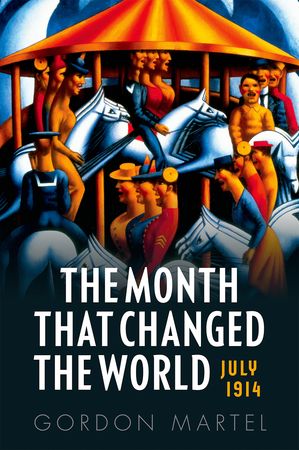
‘The Month That Changed The World: Monday 3 August 1914’ by Gordon Martel

9780199665389_450

Monday 3 August 1914 by Gordon Martel

At 7 a.m. Monday morning the reply of the Belgian government was handed to the German minister in Brussels. The German note had made ‘a deep and painful impression’ on the government. France had given them a formal declaration that it would not violate Belgian neutrality, and, if it were to do so, ‘the Belgian army would offer the most vigorous resistance to the invader’. Belgium had always been faithful to its international obligations and had left nothing undone ‘to maintain and enforce respect’ for its neutrality. The attack on Belgian independence which Germany was now threatening ‘constitutes a flagrant violation of international law’. No strategic interest could justify this. ‘The Belgian Government, if they were to accept the proposals submitted to them, would sacrifice the honour of the nation and betray at the same time their duties towards Europe.’

M_37_4_Charles_de_Brocqueville_9_VIII_14

Belgian Prime Minister Charles de Brocqueville. By Garitan CC-BY-SA-3.0 via Wikimedia Commons

When the British cabinet reconvened later that morning at 11 a.m. there were now four ministers prepared to resign over the issue of British intervention. Their discussion lasted for three hours, at the end of which they agreed on the line to be taken by Sir Edward Grey when he addressed the House of Commons at 3 p.m. ‘The Cabinet was very moving. Most of us could hardly speak at all for emotion.’

Grey began his address to the House by explaining that the present crisis differed from that of Morocco in 1912. That had been a dispute which involved France primarily, to whom Britain had promised diplomatic support, and had done so publicly. The situation they faced now had originated as a dispute between Austria and Serbia – one in which France had become engaged because it was obligated by honour to do so as a result of its alliance with Russia. But this obligation did not apply to Britain. ‘We are not parties to the Franco-Russian Alliance. We do not even know the terms of that Alliance.’

…………………….

There was another, more immediate consideration: what should Britain do in the event of a violation of Belgian neutrality? He warned the House that if Belgium’s independence were to go, that of Holland would follow. And what…

‘If France is beaten in a struggle of life and death, beaten to her knees, loses her position as a great Power, becomes subordinate to the will and power of one greater than herself’? If Britain chose to stand aside and ‘run away from those obligations of honour and interest as regards the Belgian Treaty, I doubt whether, whatever material force we might have at the end, it would be of very much value…’

‘I do not believe for a moment, that at the end of this war, even if we stood aside and remained aside, we should be in a position, a material position, to use our force decisively to undo what had happened in the course of the war, to prevent the whole of the West of Europe opposite to us—if that had been the result of the war—falling under the domination of a single Power, and I am quite sure that our moral position would be such as to have lost us all respect.’

While Grey was speaking in the House the king and queen were driving along the Mall to Buckingham Palace in an open carriage, cheered by large crowds. In Berlin the Russian ambassador was being attacked by a mob wielding sticks, while the German chancellor was sending instructions to the ambassador in Paris to inform the French government that Germany considered itself to now be ‘in a state of war’ with France. At 6 p.m. the declaration was handed in at Paris:

‘The German administrative and military authorities have established a certain number of flagrantly hostile acts committed on German territory by French military aviators. Several of these have openly violated the neutrality of Belgium by flying over the territory of that country; one has attempted to destroy buildings near Wesel; others have been seen in the district of the Eifel, one has thrown bombs on the railway near Karlsruhe and Nuremberg.’

The French president welcomed the declaration. It came as a relief, Poincaré said, given that war was by this time inevitable.

‘It is a hundred times better that we were not led to declare war ourselves, even on account of repeated violations of our frontier…. If we had been forced to declare war ourselves, the Russian alliance would have become a subject of controversy in France, national [élan?] would have been broken, and Italy may have been forced by the provisions of the Triple Alliance to take sides against us.’

When the British cabinet met again briefly in the evening they had before them the text of the German ultimatum to Belgium and the Belgian reply to it. They agreed to insist that the German government withdraw the ultimatum. After the meeting Grey told the French ambassador that if Germany refused ‘it will be war’.


This piece is reblogged from the Oxford University Press history blog.


Gordon Martel is a leading authority on war, empire, and diplomacy in the modern age. His numerous publications include studies of the origins of the first and second world wars, modern imperialism, and the nature of diplomacy. A founding editor of The International History Review, he has taught at a number of Canadian universities, and has been a visiting professor or fellow in England, Ireland and Australia. Editor-in-chief of the five-volume Encyclopedia of War, he is also joint editor of the longstanding Seminar Studies in History series. His new book is The Month That Changed The World: July 1914.

– See more from OUP here:


From today, this bucolic blog of life in the English Edwardian countryside will inevitably be interspersed with accounts of international events and their effects on 1200 people in a small part of Southern England.

Tonight and tomorrow, in 2014, we are keeping vigil in our church and at our cenotaph to mark the outbreak of the war ‘tomorrow’. Sir Edward Grey said that the lights were going out all over Europe and would not be lit again in our lifetime; at the end of our vigil we shall be relighting our candles as a symbol of hope and renewal.


Elizabeth Day Purver

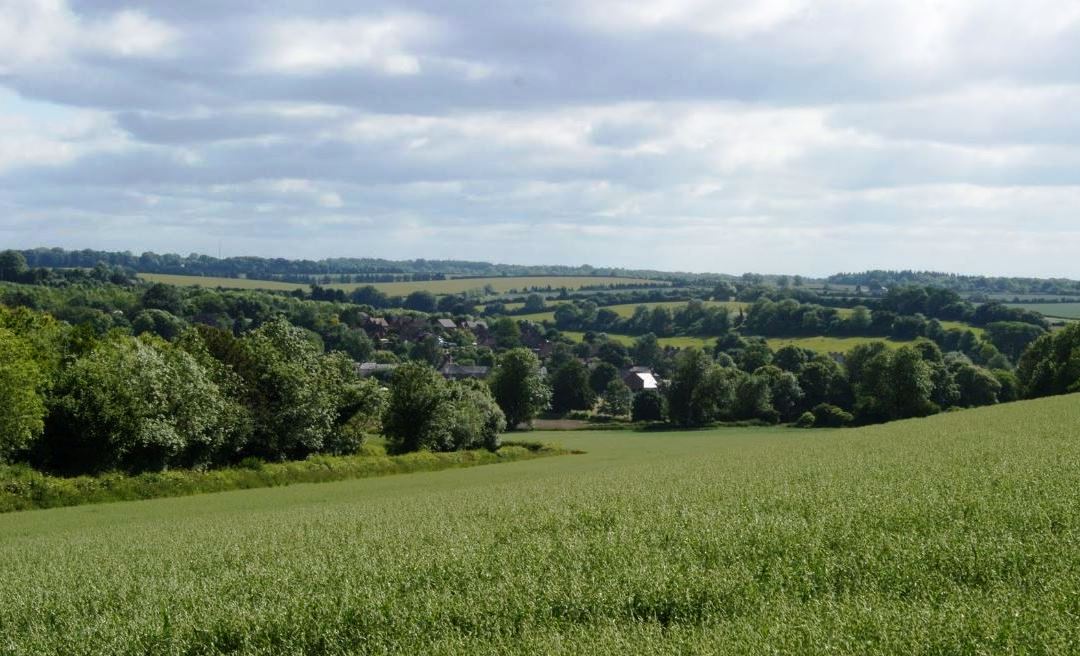
Google view Bourne Valley

Google view

Elizabeth Day Purver felt a sense of dread. She had just come home from a late summer’s walk on the hills above the village, and had enjoyed the glorious view. But the talk everywhere for the past several weeks had been of war.

Elizabeth had married a soldier: Joseph Purver had signed up in 1891 and served for twelve years in the Scots Guards. They had married at the Whitchurch register office on his return from the Boer War, in 1902.  Joseph resigned from the army in 1903, saying he was tired of battle – he called her ‘the warrior’s rest‘ – and, though the money wasn’t as good, he took real pleasure in returning to village life and working as a woodman.

h_boer1He was a good and kind man and had welcomed her ‘little mistake’, Frederick Day, born in 1900. In fact he treated him like his own son, and Frederick adored him. Not that it took much to set Joseph off – on winter evenings around the fire, he would launch into his reminiscences of the beauties of the South African veld, the comradeship of the men and the brotherhood of the regiment. Joseph had a real gift for story-telling and Frederick was entranced, as were the two children they had had together, Edwin (born in 1903) and Violet (born in 1909). If it should come to another war, Elizabeth hoped that her husband (born in 1870) would now be too old, and her son too young, to be drawn in.

Upper Wyke Farm (now Manor) SP11 6EA

courtesy Google View

Elizabeth’s great uncle, William Day, had been born in Itchen Abbas, but had come to live in St Mary Bourne when he married Sarah Piper, from an old Bourne Valley family. He had farmed at Upper Wyke (according to the 1881 census on 572 acres employing 13 men and 5 boys). His nephew, James (Elizabeth’s father) moved into a cottage on the farm and worked as a shepherd. He had never achieved his uncle’s prosperity, having been born after the collapse in farming income. Elizabeth kept house for her father and brother until becoming Mrs Purver.

Elizabeth felt very much part of the village, but her husband could trace his family tree on his father’s side back to the 1600s in these parts. His mother had been Elizabeth Fifield, the daughter of Joseph Fifield who ran The George Inn on behalf of Mrs Neale.

But the Purvers had originally been ‘purveyors‘ based in Andover, well-established merchants. And in 1702, Joseph’s great great great great grandfather, Anthony Purver, had been born in St Mary Bourne. Although born illegitimate, and beginning his life as a shepherd as had Joseph, Anthony had taught himself Hebrew, Greek, Syriac and Aramaic and gone on to re-translate the bible from scratch. And in 1764 it had been published, and became known worldwide as ‘The Quaker Bible‘. When the Purvers set themselves a task, there was no holding them!

Elizabeth was not a great bible-reader herself, and they had chosen to get married in a registry office rather than have to put up with sermonising by the vicar about her own love-child. But she was crossing her fingers and asking whatever divinity existed, if it did, to spare her family from having to fight in another war.